EARTHSCRAPER (PROJECT)
Design Studio V, Azad University, 2011 Teamwork(two people) Advisor: Dr Alireza Rezwani
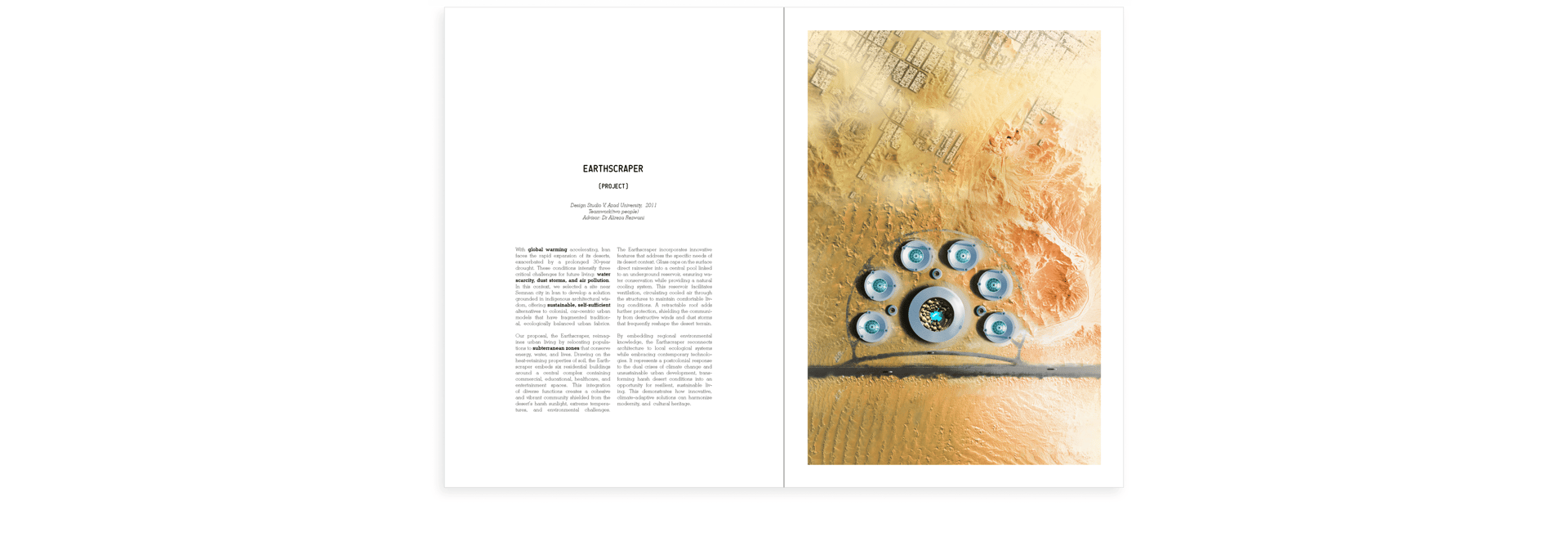
With global warming accelerating, Iran faces the rapid expansion of its deserts, exacerbated by a prolonged 30-year drought. These conditions intensify three critical challenges for future living: water scarcity, dust storms, and air pollution. In this context, we selected a site near Semnan city in Iran to develop a solution grounded in indigenous architectural wisdom, offering sustainable, self-sufficient alternatives to colonial, car-centric urban models that have fragmented traditional, ecologically balanced urban fabrics.
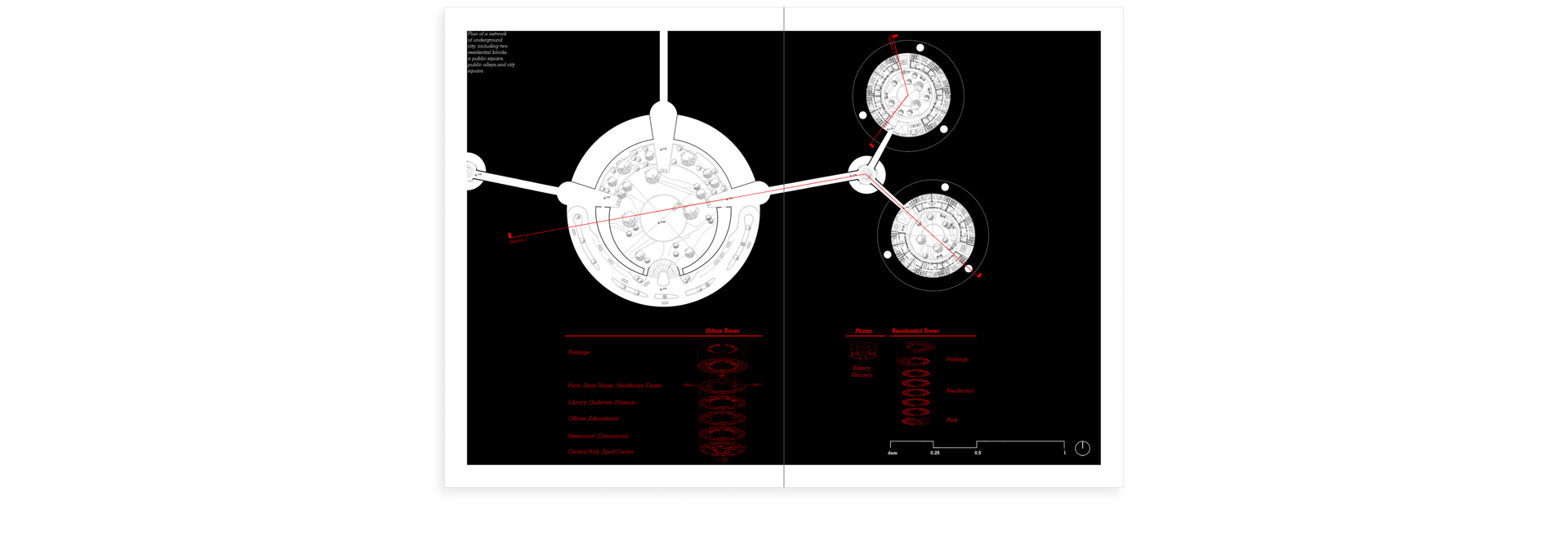
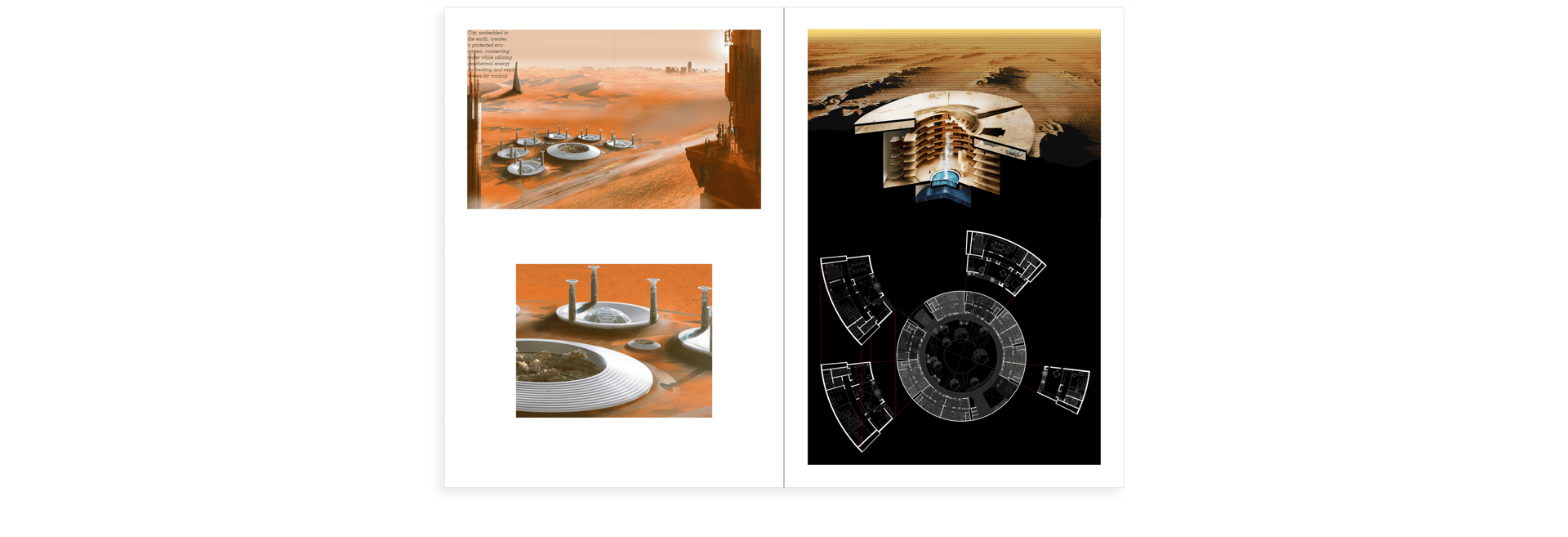
Our proposal, the Earthscraper, reimagines urban living by relocating populations to subterranean zones that conserve energy, water, and lives. Drawing on the heat-retaining properties of soil, the Earth-scraper embeds six residential buildings around a central complex containing commercial, educational, healthcare, and entertainment spaces. This integration of diverse functions creates a cohesive and vibrant community shielded from the desert’s harsh sunlight, extreme temperatures, and environmental challenges.
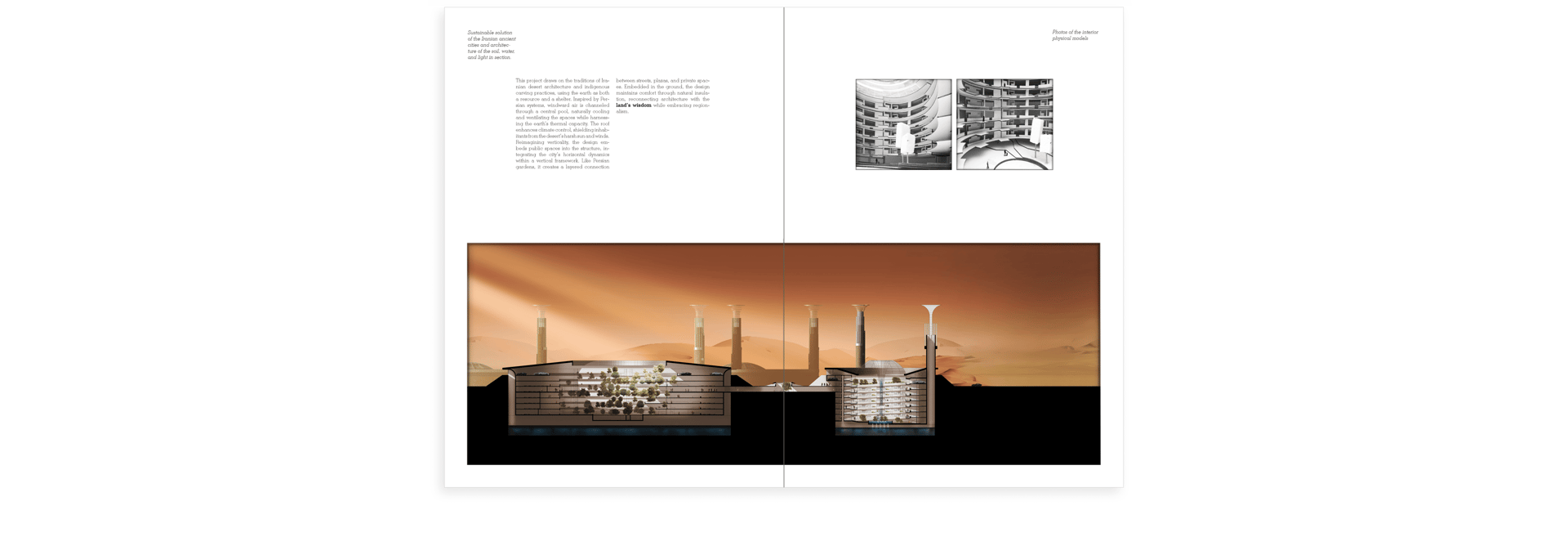
The Earth-scraper incorporates innovative features that address the specific needs of its desert context. Glass caps on the surface direct rainwater into a central pool linked to an underground reservoir, ensuring water conservation while providing a natural cooling system. This reservoir facilitates ventilation, circulating cooled air through the structures to maintain comfortable liv- ing conditions. A retractable roof adds further protection, shielding the community from destructive winds and dust storms that frequently reshape the desert terrain.
By embedding regional environmental knowledge, the Earthscraper reconnects architecture to local ecological systems while embracing contemporary technologies. It represents a postcolonial response to the dual crises of climate change and unsustainable urban development, trans- forming harsh desert conditions into an opportunity for resilient, sustainable living. This demonstrates how innovative, climate-adaptive solutions can harmonize modernity, and cultural heritage.