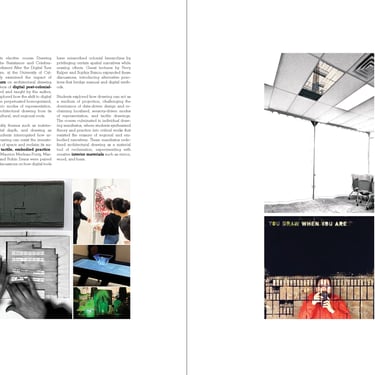
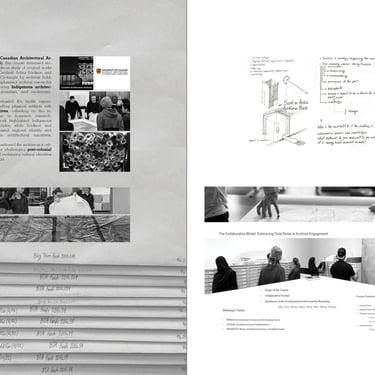
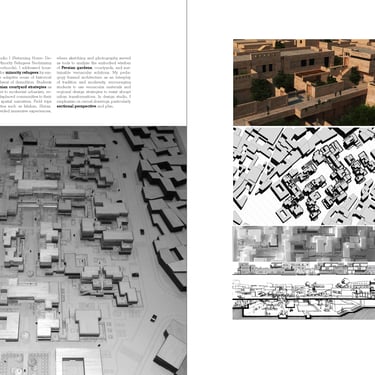
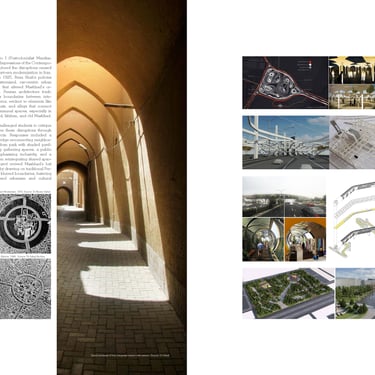
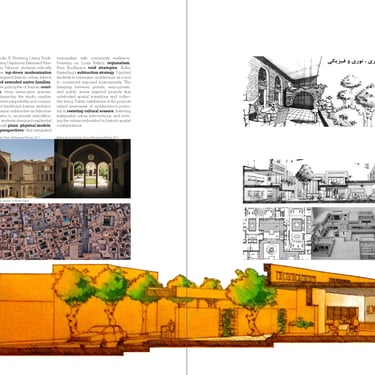
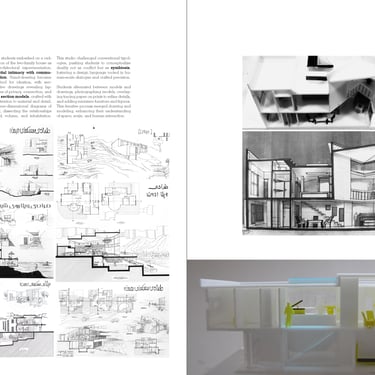
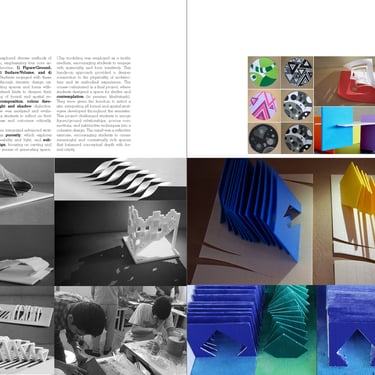
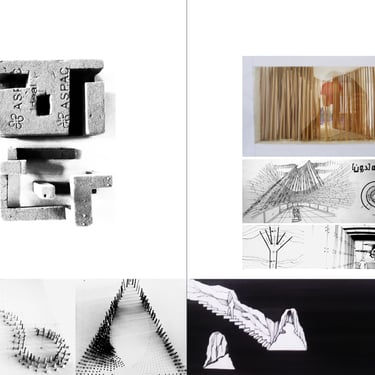
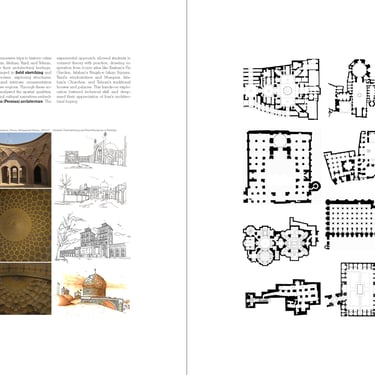
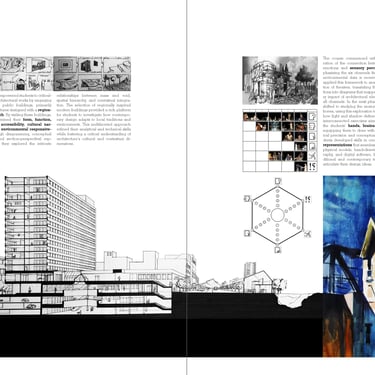
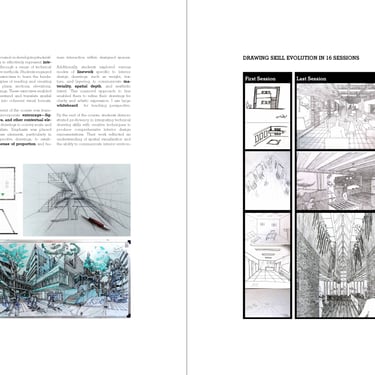
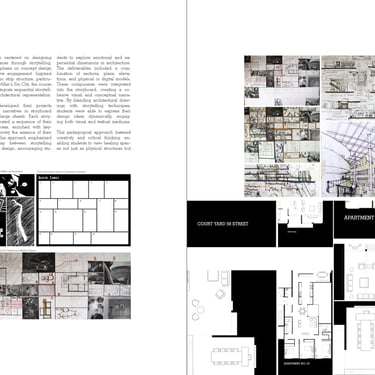
Moezzi’s teaching approach begins with a deep curiosity about how students learn through drawing, making, and historical thinking, and he treats drawing as an experiential and critical method for understanding architecture rather than a representational skill alone. His pedagogy interweaves history, theory, and embodied practices, encouraging students to think through the act of drawing, to question representational conventions, and to situate design within cultural and historical contexts. Over more than twelve years of teaching in Canada and Iran, he has developed a consistent emphasis on experiential learning, reflective practice, and drawing-led inquiry. At the University of Calgary (2020–2024), he taught the graduate elective Drawing Manifesto in 2024, which combined philosophical reflection with hands-on representational experimentation. Also in 2024, he co-taught Why Keep Architectural Archives with Robb Gilbert at the Canadian Architectural Archives (CAA), where students engaged directly with archival materials to explore the theoretical and cultural significance of architectural records. As a PhD Teaching Assistant, he contributed to Design Thinking in the Built Environment Studio II in 2022 and Studio I in 2020 and 2021, integrating embodied perception, spatial reasoning, and historical frameworks into design pedagogy. Prior to moving to Canada, he taught at Eqbal University and Azad University (2012–2018), leading studios and lecture courses on architectural processes (2018), modernity and tradition (2018), refugee and minority housing (2016–2017), ancient urban fabrics (2017), contemporary architecture (2015 and 2017), representational foundations (2012–2016), and culturally situated design. Moezzi has also delivered invited lectures internationally, including at the University of Calgary (2024, 2025), the National University of Singapore (2022), the University of Nottingham in the United Kingdom (2023), and multiple institutions in Iran. He has supervised undergraduate and graduate theses (2016–2018) on displacement, minority communities, and historic preservation, and served as a reviewer for SAPL graduate studios between 2022 and 2024. Across these contexts, his teaching cultivates perceptual sensitivity, critical inquiry, and cultural awareness, positioning design education as an embodied, reflective, and historically grounded practice.