HO(U)S(E)PITAL (PROJECT)
Design Studio IV, Azad University, 2010 Teamwork(two people) Advisor: Dr Mahmoud Hajrezapour
In Iranian hospitals, patients, families, and staff often feel unsafe, stressed, and disconnected. This is largely due to spatial environments that lack privacy, daylight, open spaces, and hierarchy qualities essential to fostering comfort and well-being. By reimagining the hospital as the HOUSEPI- TAL, we approach its design as an embodied and phenomenological experience: a place of healing where the spatial environment itself plays a restorative role.
Analyzing hospitals in Mashhad City revealed a need for spaces that prioritize both human comfort and the experiential nature of architecture. A healing space should function as a home where patients, families, and staff feel grounded, safe, and able to connect with nature. We categorized the audiences into four main groups:
1.Patients
2.Families
3.Staff
4.Citizens
To address their needs, the hospital was divided into three interconnected volumes, each supporting an embodied healing experience:
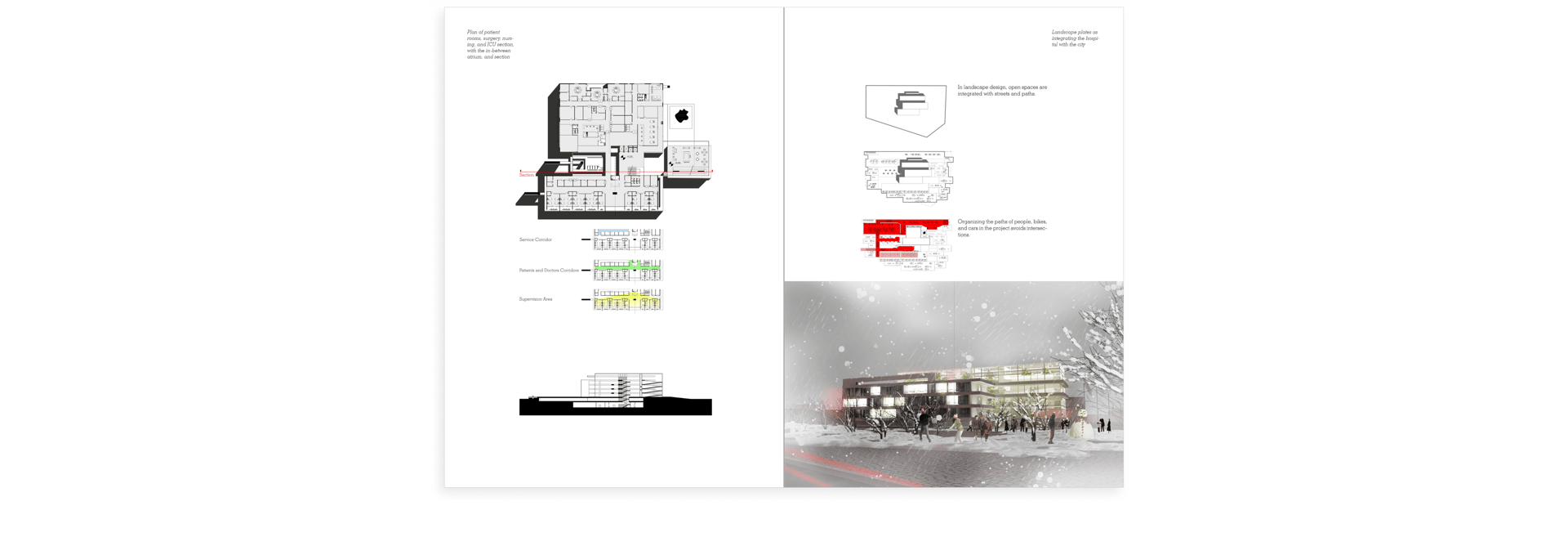
1.Solid Volume: Therapeutic spaces, including surgical areas, ICUs, NICUs, and treatment rooms, prioritize safety, order, and focus for patients and staff.
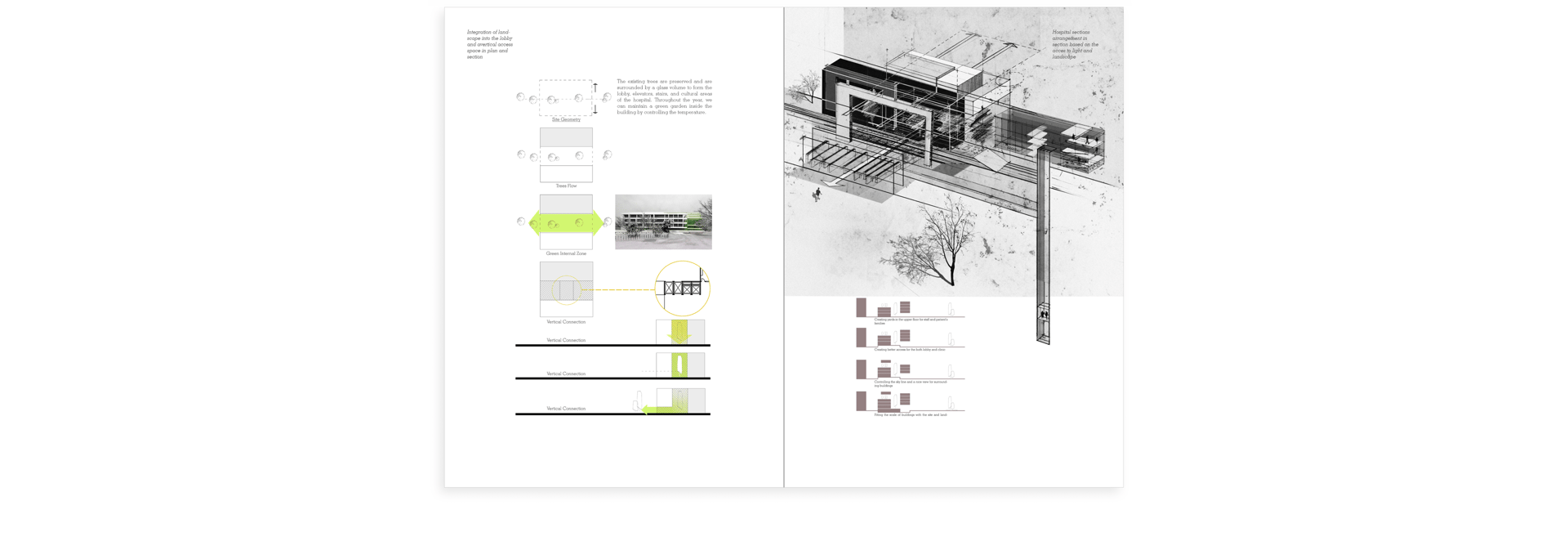
2.Transparent Volume: Public spaces such as lobbies, reception, elevators, cafeterias, galleries, and family areas foster visibility, flow, and connection while maintaining functional privacy.
3.Southern Volume: Positioned to frame views of the Malak Abad Garden, this space merges architecture with nature, encouraging embodied encounters with light, air, and greenery as integral to the healing process.
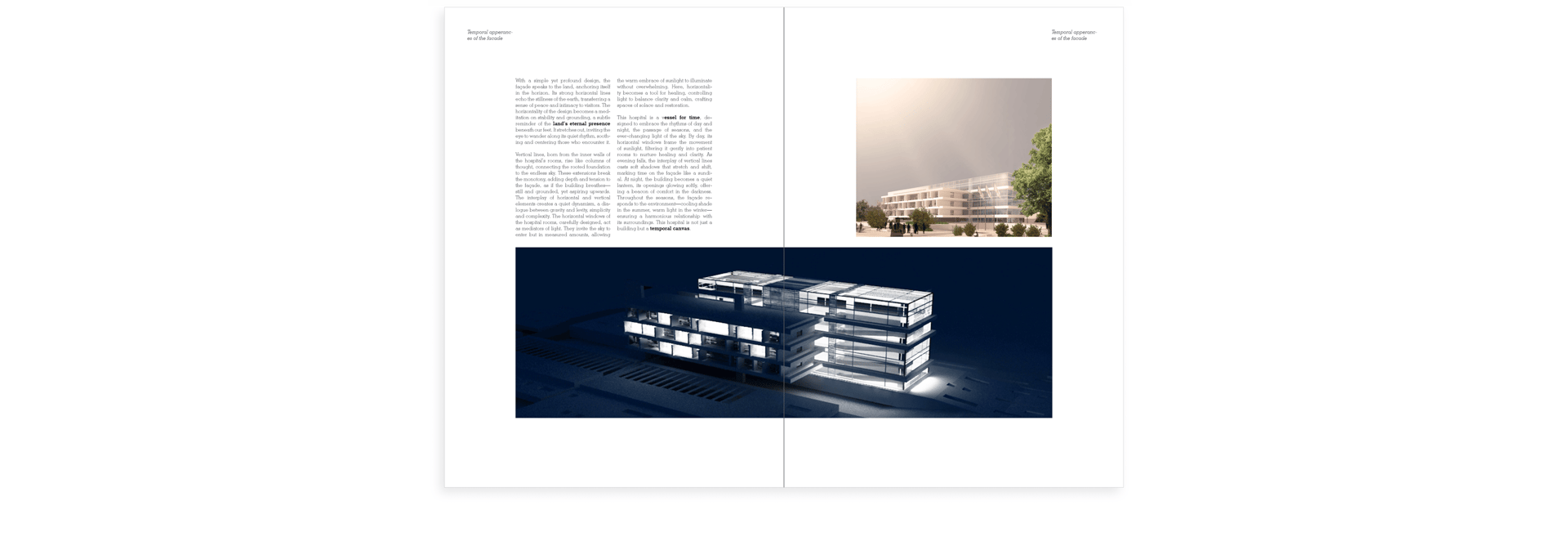
By integrating planning, spatial hierarchy, and access to natural elements, the hospital becomes a place where architecture through light, movement, and materiality promotes emotional comfort and healing, transforming sterile environments into restorative spaces of care.