REVERSED VOIDS (PROJECT)
Design Studio III, Azad University, 2009 Teamwork(two people)
Advisor: Dr Ehsan Sheikholharam and Prof Bahman Kalali
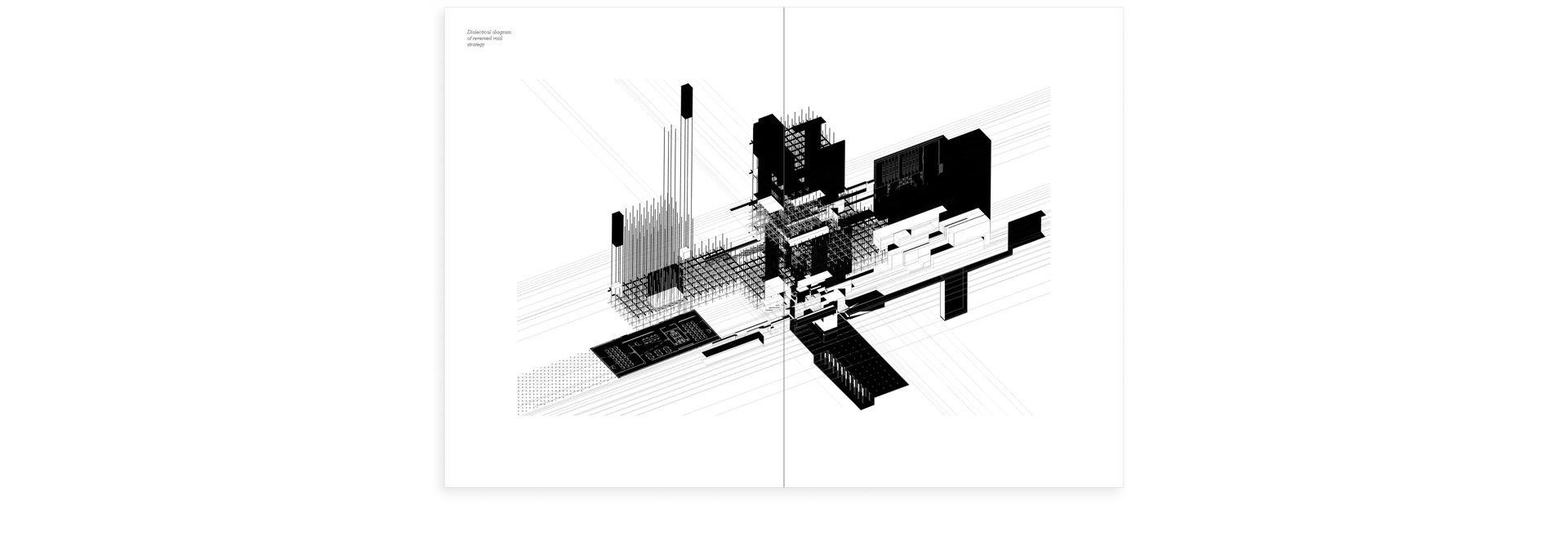
In Mashhad’s urban design and architecture, the absence of interactive environments for citizens is evident. Traditional Iranian architecture, rooted in regionalism, often carved spaces into landscapes or solid masses, creating voids such as courtyards, domes, and gardens to foster human connection. These carved spaces acted as sanctuaries for social and cultural exchange, shaping values and customs around void-centered living. However, the rapid modernization of cities has disrupted this regional balance, leaving contemporary spaces fragmented and contradictory.
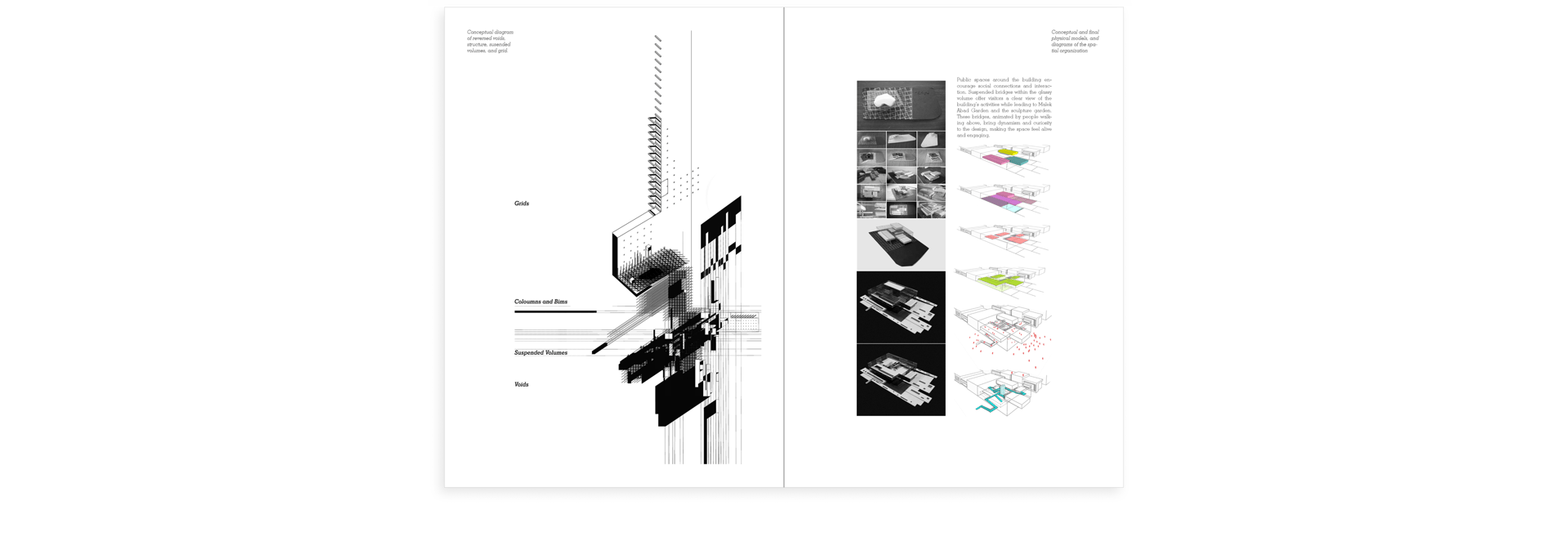
To address this, we explored the subtractive strategies articulated by Koolhaas and Keller Easterling, where space is not added but rather revealed through carving, voids, and transparencies. Drawing inspiration from Iran’s architectural legacy, we proposed the Reverse Void, a design concept that reconciles the tension between mass and void while restoring continuity between spaces.
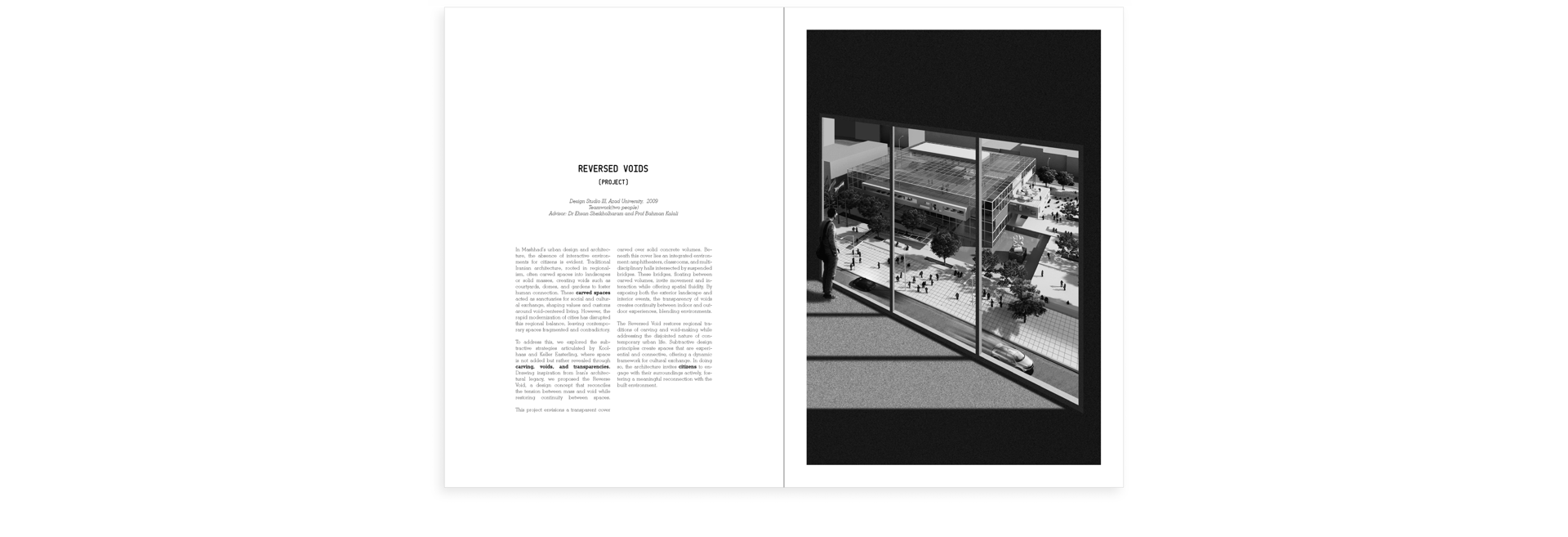
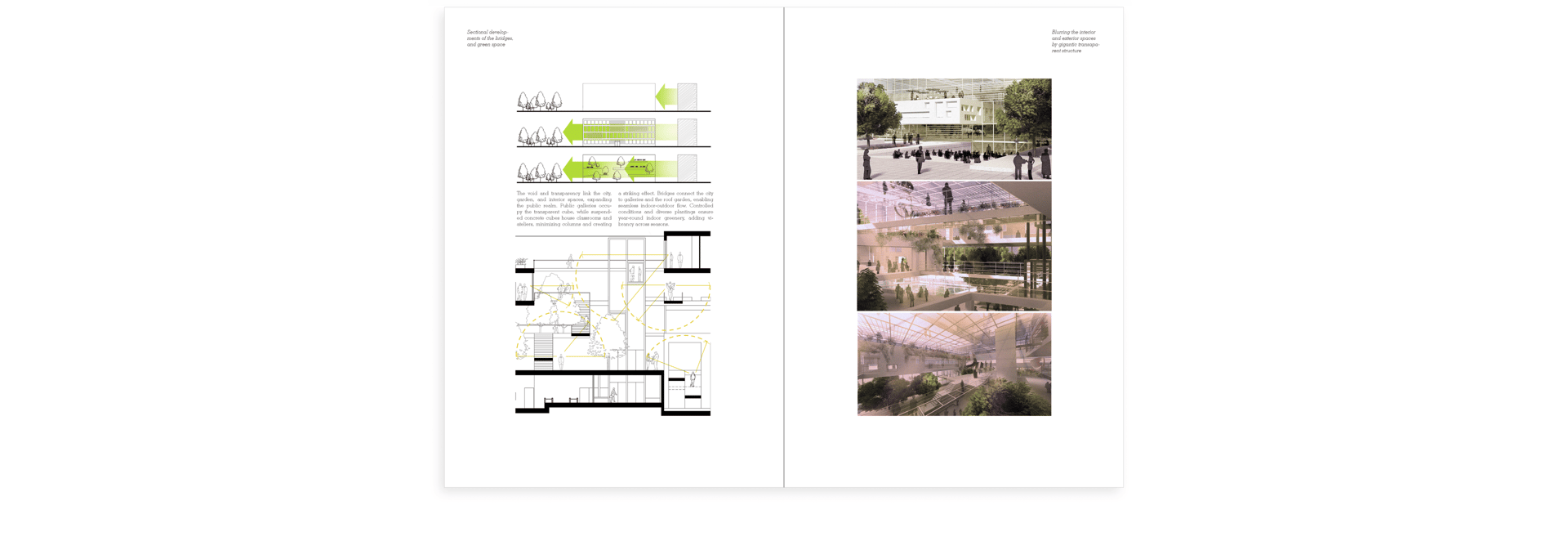
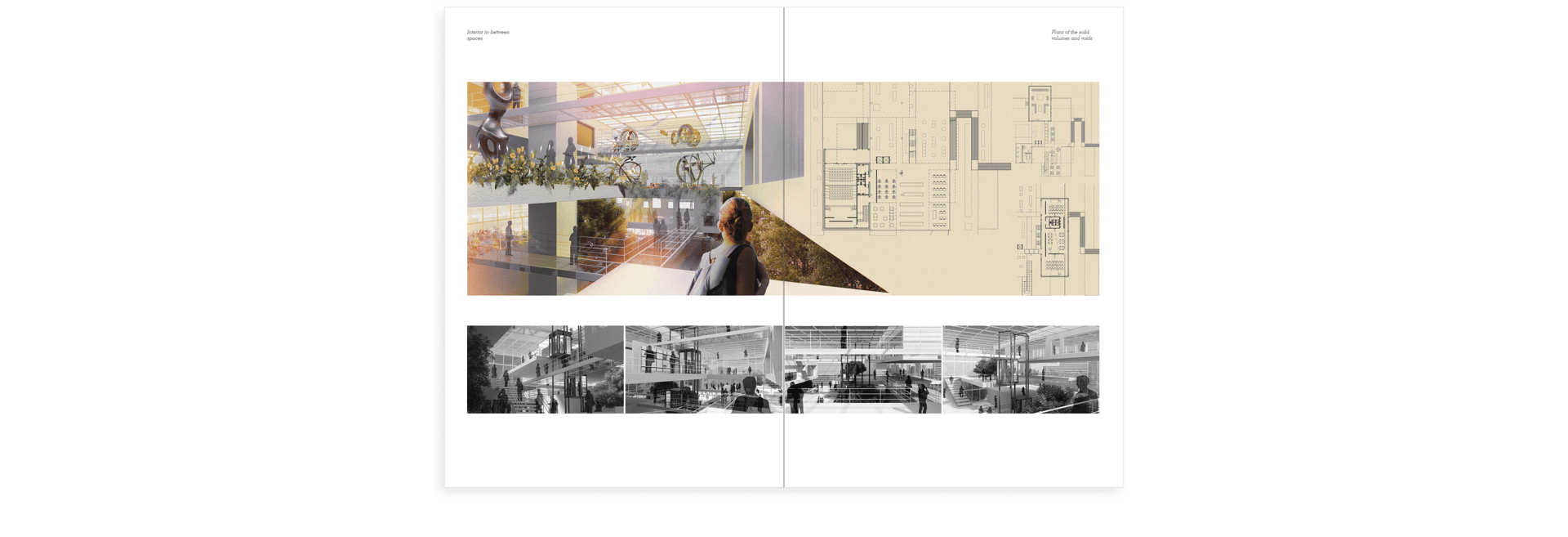
This project envisions a transparent cover carved over solid concrete volumes. Beneath this cover lies an integrated environment: amphitheaters, classrooms, and multidisciplinary halls intersected by suspended bridges. These bridges, floating between carved volumes, invite movement and in- teraction while offering spatial fluidity. By exposing both the exterior landscape and interior events, the transparency of voids creates continuity between indoor and outdoor experiences, blending environments.
The Reversed Void restores regional traditions of carving and void-making while addressing the disjointed nature of contemporary urban life. Subtractive design principles create spaces that are experiential and connective, offering a dynamic framework for cultural exchange. In doing so, the architecture invites citizens to engage with their surroundings actively, fostering a meaningful reconnection with the built environment.